
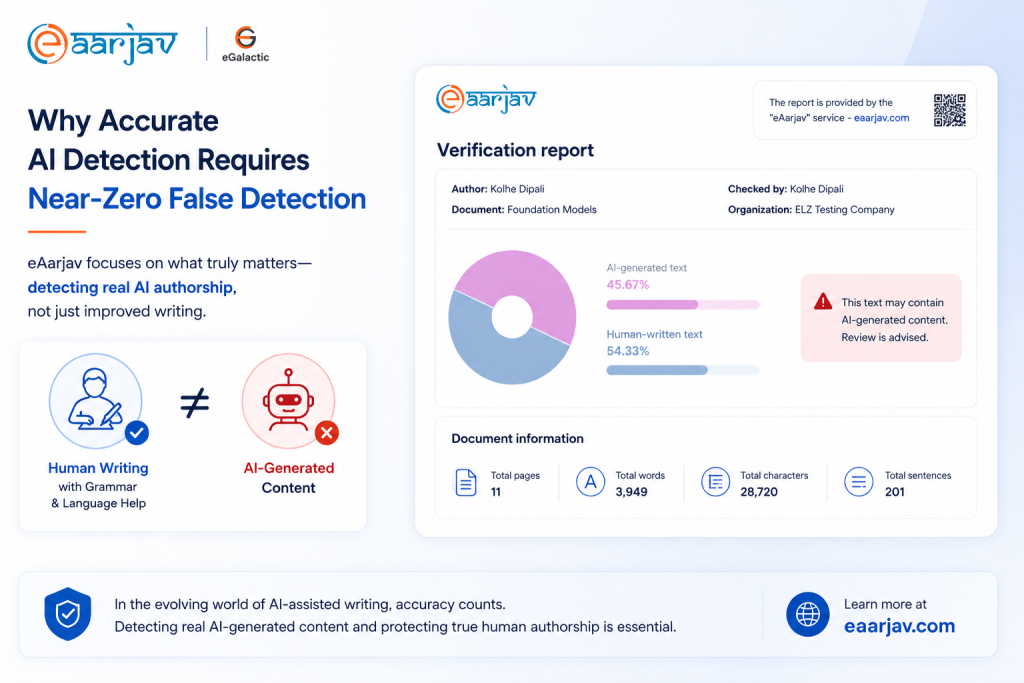
As AI writing tools continue to be adopted more widely across academia and professional environments, the conversation around AI detection has become more significant. But one important aspect is often forgotten: effective AI detection is not only about detection of AI generated text, it is also about avoiding false detection.
In today’s digital ecosystem, many people use tools to fix grammar, improve spelling or polish the language. This assistance does not necessarily transform human-created work into AI-generated work. A responsible AI detection platform must be able to tell the difference between actual AI authorship and simple editing.
Many platforms tend to flag polished or grammatically improved content as AI-generated, even when the ideas, structure and writing are all human. Such false detection can result in needless confusion, academic disagreements, and mistrust in detection systems.
The challenge here is to not just make a tiny linguistic improvement but a meaningful AI intervention and that’s what eAarjav is all about.
eAarjav is built with a strong focus on identifying actual AI-generated content with minimum to almost zero false positives. The platform is focused on accuracy, fairness and contextual analysis, not superficial indicators. This allows institutions and organisations to avoid falsely tagging actual human work. The platform is able to detect large AI generated patterns such as:
- AI written passages and paragraphs
- Rephrasing full sentence structures
- Automatically rephrase it.
- Changing large scale wording
- AI-generated content blocks
At the same time, eAarjav cleverly distinguishes them from regular editorial work such as fixing grammar or improving language. This distinction is especially important for universities, research institutions, publishers, and organisations that aim to maintain academic integrity in a balanced and transparent way.
AI detection systems should promote ethical practices, while not discouraging legitimate writing aid tools that improve clarity and readability. The rise of AI demands that detection technology be equally responsible in keeping pace. Going forward academic integrity will be about more than detecting misuse of AI but also ensuring that real human work is treated fairly. In the evolving world of AI-assisted writing, accuracy counts. Detecting real AI-generated content and protecting true human authorship is no longer optional – it is essential.